


Price:
£120 (GBP)
$162 (USD)
€140 (Euro)
Price:
£65 (GBP)
$87 (USD)
€76 (Euro)
Price:
£50 (GBP)
$67 (USD)
€58 (Euro)
Special pricing is available for schools, academies, societies, and other educational or professional organizations
ordering more than 5 copies.
For further information or to request a personalized quotation, please get in touch at
bookorders@cinematically.net






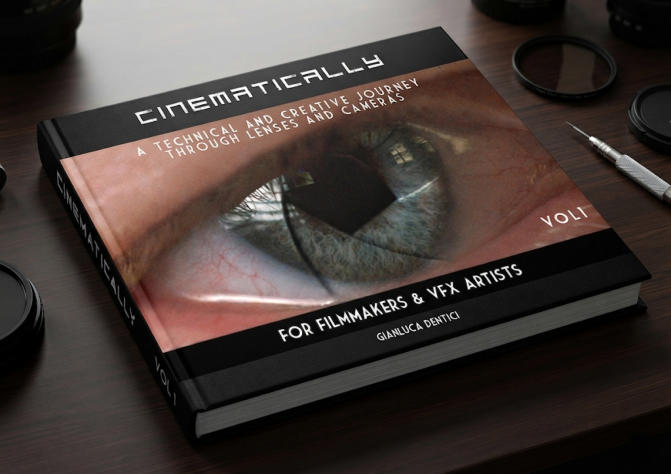


This book offers a rich and comprehensive exploration of
cameras and lenses, bringing together technical
knowledge, practical insights, historical perspective, and
the experience of some of the leading professionals in
the world of cinematography.
Throughout its chapters, the book explores the evolution,
design, technology, and creative possibilities of cameras
and lenses, providing readers with a deeper
understanding of the tools that shape the cinematic
image.
It is intended not only for cinematographers and camera
professionals, but also for filmmakers, students,
technicians, and anyone interested in the technology and
craftsmanship behind moving images. The final chapter takes a more personal and conversational approach, bringing together a
series of conversations with renowned cinematographers, including Seamus McGarvey, Cristiano Di Nicola, Birgit “Bebe” Dierken,
Carlo Rinaldi, and Alice Brooks.
Their experiences and perspectives offer a direct insight into the creative and practical decisions that define the use of cameras
and lenses in contemporary cinematography.
Alongside these cinematographers, the book also features conversations with engineers, designers, and industry professionals
working with some of the most important camera and lens manufacturers in the world. Among them are Peter Martin of Vantage
Film, Arnaud Esbelin of Angénieux, Francesco Giardiello, Dan Sasaki of Panavision, Joachim Kuss, Jeanfre Fachon, Dennis Meyer,
Marius Jerschke, and Benjamin Hagen of ZEISS.
These conversations provide a unique opportunity to look beyond technical specifications and explore the ideas, experience,
research, and craftsmanship that lie behind the equipment used to create cinematic images. They reveal how manufacturers and
filmmakers work together, how new technologies respond to the evolving needs of cinematography, and how tradition, innovation,
and creative vision continue to influence the development of cameras and lenses.
Ultimately, this book is both a technical and human journey into the world of cameras and lenses—from the engineering and
craftsmanship behind these extraordinary tools to the creative vision of the cinematographers who use them. It is an exploration
of not only how cameras and lenses work, but also why they matter, how they have evolved, and how they continue to shape the
language of cinema.
The book is available in three different formats and price points, allowing readers to choose the option that best suits their
preferences and budget. Each edition includes a unique QR code that provides access to an online repository, where readers can
view ultra-high-resolution images regardless of the print format or quality they have selected.
CHAPTER 1
1.1 – Introduction
1.2 - Light Perception and Lens principles
1.3 – Cameras and Sensors
1.4 – Formats
CHAPTER 2
2.1.1 – Color Temperature
2.1.2 – Exposure
2.1.3 - Sensitivity
2.1.4 – Shutter
2.1.5 - Frame Rate
2.1.6 - 24 Fps vs 48 Fps
2.1.7 - Artificial lighting, Computer Screens and Shutters
CHAPTER 3
3.1 Lenses in Principle
3.2.1 Focal Length, Field of View
3.2.2 Large Formats
3.2.3 Aspect Ratio and Delivery Formats
CHAPTER 4
4.1 - Anatomy of a Lens
4.2 - Field of View, Angle of View & Focal Length
4.3 – Diaphragm
4.4.1 – Focus
4.4.2 – Minimum Focus Distance and the Flange
4.4.3 – Pupil
4.4.4 - Depth of Field
4.4.5 – Hyperfocal Distance
4.4.6 – Circle of Confusion
4.5 – Variable Focal Length: Zoom Lenses
CHAPTER 5
5.1 – Using your tools to shape the shot
5.2 – Choosing your Focal length
5.3 – Simulating Lighting, Camera and Framing with Digital Tools
CHAPTER 6
6.1 – Lenses Characteristics
6.2 – Lens Breathing
6.3 - Wider or Longer Lenses ??
6.4 - Prime Lenses vs Zoom Lenses
6.5 – Visual Effects, Camera and Lens Metadata
CHAPTER 7
7.1 – Distortions and Aberrations
7.2 – Spherical Aberration
7.3 – Field Curvature
7.4 – Chromatic Aberrations
7.5 – Longitudinal / Axial Chromatic Aberration
7.6 – Coma
7.7 – Astigmatism
7.8 – Vignetting
7.9 – Lens Flare Characteristics
7.10.1 - Stray Light
7.10.2 – Starburst
7.10.3 – Ghost Flares
7.10.4 – Caustics
7.10.5 - Scatter Halo
7.10.6 - Rainbow and Waterfall Flares
7.10.7 – Internal Bounce Flare
7.11 – Lens Coating
7.12 – Controlling the Light Entering the Lens
7.13 – Preventing Unwanted Lens Flares
7.14 – Creating Artistic Lens Flares
7.15 – Color Casting
7.16 – Acutance and Resolution
CHAPTER 8
8.1 – Bokeh
8.2.1 - Pupil Occlusion: The Cat’s-Eye Effect
8.2.2 - Spherical Aberration and Bokeh
8.2.3 - Chromatic Aberration on Bokeh
8.2.4 – Customized Bokeh Shape
8.2.5 – Bokeh in Vintage Lenses
CHAPTER 9
9.1 – Diopters
9.2 – Special Diopters and Solutions
CHAPTER 10
10.1 – Wider Screen Formats and Anamorphic Lenses
10.2.1 – Understanding Delivery Formats
10.2.2 – Shooting Anamorphic
10.2.3 - Further words on Aspect Ratio and TV Formats
10.2.4 - Ultra Panavision 70 & Super Panavision 70
10.3 – Spherical vs Anamorphic
10.4 – Multi-format Workflows
10.5.1 - Anamorphic Lenses Anatomy
10.5.2 – Front Anamorphic Lenses
10.5.3 – Rear Anamorphic Lenses
10.5.4 – Hybrid Anamorphic and Special Solutions
10.5.5 – Anamorphic Lens Element Cuts
10.5.6 – Lenses, Groups and Surfaces
10.6 – Lens Extenders
10.7 – Further Words on Anamorphic Rendition
10.8 - Lens Breathing on Anamorphic Lenses
10.9 - Distortion in Anamorphic Lenses
10.10 - Magnification, Depth, Focus Roll Off and Close Focus
CHAPTER 11
11.1 - Anamorphic Aesthetic
11.1.1 – Aberrations on Anamorphic Lenses
11.1.2 - Lens Curvature and Spherical Aberration in Anamorphic Lenses
11.1.3 – Anamorphic Bokeh
11.1.4 – Astigmatism in Anamorphic Lenses
11.1.5 – Coma in Anamorphic Lenses
11.2 - Anamorphic Lens Flare
11.3 – Exploring Vertical Anamorphic
11.4 - Special Anamorphic Adapters
11.5 – Anamorphic Focal Lengths and Lens Housing
11.6 - Hybrid Anamorphic Lenses
11.7 - Focusing with Anamorphic Lenses and New Technologies
CHAPTER 12
12.1 – Macro Lenses
12.2 – Further words on Macro Lens Anatomy
12.3 - Further Tests with Macro Lenses
12.4 - Cine Probe Lenses
12.5 - Fish-Eye Lenses
CHAPTER 13
FILTERS
13.1 - Polarizing Filters
13.2.1 - Diffusion Filters
13.2.2 – Other Diffusion Filters
13.2.3 – When Not To Use Diffusion Filters
13.3 – Contrast Reduction Filters
13.4 – Atmoshperic Filters
13.5 – Special Effects Filters
13.6 – Gradient Filters
13.7 – Rear Filter Mounts, Customizable Specialty Lenses and "Detuning"
CHAPTER 14
14.1 - Lens Testing
CHAPTER 15
Camera, Lenses and VFX Workflow
15.1 – Lens Distortion Workflow
15.2 – Removing Strong Lens Distortions in Post Production
15.3.1 – Lens Distortion, Focus Changes and Metadata Management
15.3.2 – Virtual Production and Lens Data
15.3.3 – Metadata Precision and Applications
15.3.4 – Recording Metadata with ‘Analogic’ lenses
15.4 - Simulating Vignetting in Post Production
15.5 - Chromatic Aberration Correction and Re-application Technique
15.6 – Simulating Spherical Aberration and Focus Fall-Off
15.7 – Leans Breathing and Mumps
15.8 – Simulating Astigmatism
15.9 – Realistic Lens Bokeh Simulation
15.10 – Lens Emulation Using Third-party Digital Tools
15.11 – Lens Flares Capture and Custom Libraries
CHAPTER 16
CONVERSATIONS
A conversation with Peter Martin (Vantage Films)
A conversation with Seamus McGarvey
A conversation with Zeiss
A conversation with Cristiano Di Nicola
A conversation with Seamus McGarvey
A conversation with Dan Sasaki (Panavision)
A conversation with Birgit "Bebe" Dierken
A conversation with Arnaud Esbelin (Angenieux)
A conversation with Francesco Giardiello
A conversation with Arnaud Esbelin (Angenieux)
A conversation with Carlo Rinaldi
A conversation with Alice Brooks
CHAPTER 17
THANK YOUs










This book could not have been created without the support and generosity of many big brands and rentals. Among them in alphabetical order:



Price:
£120 (GBP)
$162 (USD)
€140 (Euro)
Price:
£65 (GBP)
$87 (USD)
€76 (Euro)
Price:
£50 (GBP)
$67 (USD)
€58 (Euro)
Special pricing is available for schools, academies, societies, and
other educational or professional organizations ordering more
than 5 copies.
For further information or to request a personalized quotation,
please get in touch at bookorders@cinematically.net






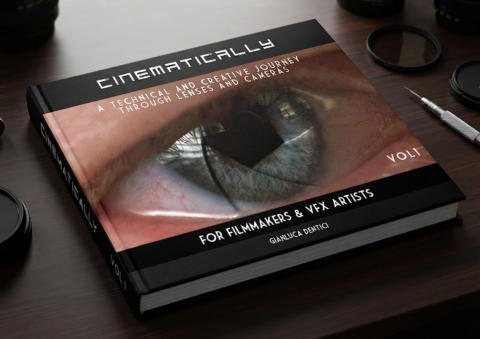
This
book
offers
a
rich
and
comprehensive
exploration
of
cameras
and
lenses,
bringing
together
technical
knowledge,
practical
insights,
historical
perspective,
and
the
experience
of
some
of
the
leading
professionals
in
the
world
of
cinematography.
Throughout
its
chapters,
the
book
explores
the
evolution,
design,
technology,
and
creative
possibilities
of
cameras
and
lenses,
providing
readers
with
a
deeper
understanding of the tools that shape the cinematic image.
It
is
intended
not
only
for
cinematographers
and
camera
professionals,
but
also
for
filmmakers, students, technicians, and anyone interested in
the
technology
and
craftsmanship
behind
moving
images.
The
final
chapter
takes
a
more
personal
and
conversational
approach,
bringing
together
a
series
of
conversations
with
renowned
cinematographers,
including
Seamus
McGarvey
,
Cristiano Di Nicola, Birgit “Bebe” Dierken, Carlo Rinaldi, and Alice Brooks.
Their
experiences
and
perspectives
offer
a
direct
insight
into
the
creative
and
practical
decisions
that
define
the
use
of
cameras
and
lenses
in
contemporary
cinematography.
Alongside
these
cinematographers,
the
book
also
features
conversations
with
engineers,
designers,
and
industry
professionals
working
with
some
of
the
most
important
camera
and
lens
manufacturers
in
the
world.
Among
them
are
Peter
Martin
of
Vantage
Film,
Arnaud
Esbelin
of
Angénieux,
Francesco
Giardiello,
Dan
Sasaki
of
Panavision,
Joachim
Kuss,
Jeanfre
Fachon,
Dennis
Meyer,
Marius
Jerschke, and Benjamin Hagen of ZEISS
.
These
conversations
provide
a
unique
opportunity
to
look
beyond
technical
specifications
and
explore
the
ideas,
experience,
research,
and
craftsmanship
that
lie
behind
the
equipment
used
to
create
cinematic
images.
They
reveal
how
manufacturers
and
filmmakers
work
together,
how
new
technologies
respond
to
the
evolving
needs
of
cinematography,
and
how
tradition,
innovation,
and
creative
vision continue to influence the development of cameras and lenses.
Ultimately,
this
book
is
both
a
technical
and
human
journey
into
the
world
of
cameras
and
lenses—from
the
engineering
and
craftsmanship
behind
these
extraordinary
tools
to
the
creative
vision
of
the
cinematographers
who
use
them.
It
is
an
exploration
of
not
only
how
cameras
and
lenses
work,
but
also
why
they
matter,
how
they
have
evolved,
and
how
they
continue
to
shape
the
language
of
cinema.
CHAPTER 1
1.1 – Introduction
1.2 - Light Perception and Lens principles
1.3 – Cameras and Sensors
1.4 – Formats
CHAPTER 2
2.1.1 – Color Temperature
2.1.2 – Exposure
2.1.3 - Sensitivity
2.1.4 – Shutter
2.1.5 - Frame Rate
2.1.6 - 24 Fps vs 48 Fps
2.1.7 - Artificial lighting, Computer Screens and Shutters
CHAPTER 3
3.1 Lenses in Principle
3.2.1 Focal Length, Field of View
3.2.2 Large Formats
3.2.3 Aspect Ratio and Delivery Formats
CHAPTER 4
4.1 - Anatomy of a Lens
4.2 - Field of View, Angle of View & Focal Length
4.3 – Diaphragm
4.4.1 – Focus
4.4.2 – Minimum Focus Distance and the Flange
4.4.3 – Pupil
4.4.4 - Depth of Field
4.4.5 – Hyperfocal Distance
4.4.6 – Circle of Confusion
4.5 – Variable Focal Length: Zoom Lenses
CHAPTER 5
5.1 – Using your tools to shape the shot
5.2 – Choosing your Focal length
5.3 – Simulating Lighting, Camera and Framing with Digital Tools
CHAPTER 6
6.1 – Lenses Characteristics
6.2 – Lens Breathing
6.3 - Wider or Longer Lenses ??
6.4 - Prime Lenses vs Zoom Lenses
6.5 – Visual Effects, Camera and Lens Metadata
CHAPTER 7
7.1 – Distortions and Aberrations
7.2 – Spherical Aberration
7.3 – Field Curvature
7.4 – Chromatic Aberrations
7.5 – Longitudinal / Axial Chromatic Aberration
7.6 – Coma
7.7 – Astigmatism
7.8 – Vignetting
7.9 – Lens Flare Characteristics
7.10.1 - Stray Light
7.10.2 – Starburst
7.10.3 – Ghost Flares
7.10.4 – Caustics
7.10.5 - Scatter Halo
7.10.6 - Rainbow and Waterfall Flares
7.10.7 – Internal Bounce Flare
7.11 – Lens Coating
7.12 – Controlling the Light Entering the Lens
7.13 – Preventing Unwanted Lens Flares
7.14 – Creating Artistic Lens Flares
7.15 – Color Casting
7.16 – Acutance and Resolution
CHAPTER 8
8.1 – Bokeh
8.2.1 - Pupil Occlusion: The Cat’s-Eye Effect
8.2.2 - Spherical Aberration and Bokeh
8.2.3 - Chromatic Aberration on Bokeh
8.2.4 – Customized Bokeh Shape
8.2.5 – Bokeh in Vintage Lenses
CHAPTER 9
9.1 – Diopters
9.2 – Special Diopters and Solutions
CHAPTER 10
10.1 – Wider Screen Formats and Anamorphic Lenses
10.2.1 – Understanding Delivery Formats
10.2.2 – Shooting Anamorphic
10.2.3 - Further words on Aspect Ratio and TV Formats
10.2.4 - Ultra Panavision 70 & Super Panavision 70
10.3 – Spherical vs Anamorphic
10.4 – Multi-format Workflows
10.5.1 - Anamorphic Lenses Anatomy
10.5.2 – Front Anamorphic Lenses
10.5.3 – Rear Anamorphic Lenses
10.5.4 – Hybrid Anamorphic and Special Solutions
10.5.5 – Anamorphic Lens Element Cuts
10.5.6 – Lenses, Groups and Surfaces
10.6 – Lens Extenders
10.7 – Further Words on Anamorphic Rendition
10.8 - Lens Breathing on Anamorphic Lenses
10.9 - Distortion in Anamorphic Lenses
10.10 - Magnification, Depth, Focus Roll Off and Close Focus
CHAPTER 11
11.1 - Anamorphic Aesthetic
11.1.1 – Aberrations on Anamorphic Lenses
11.1.2 - Lens Curvature and Spherical Aberration in Anamorphic Lenses
11.1.3 – Anamorphic Bokeh
11.1.4 – Astigmatism in Anamorphic Lenses
11.1.5 – Coma in Anamorphic Lenses
11.2 - Anamorphic Lens Flare
11.3 – Exploring Vertical Anamorphic
11.4 - Special Anamorphic Adapters
11.5 – Anamorphic Focal Lengths and Lens Housing
11.6 - Hybrid Anamorphic Lenses
11.7 - Focusing with Anamorphic Lenses and New Technologies
CHAPTER 12
12.1 – Macro Lenses
12.2 – Further words on Macro Lens Anatomy
12.3 - Further Tests with Macro Lenses
12.4 - Cine Probe Lenses
12.5 - Fish-Eye Lenses
CHAPTER 13
FILTERS
13.1 - Polarizing Filters
13.2.1 - Diffusion Filters
13.2.2 – Other Diffusion Filters
13.2.3 – When Not To Use Diffusion Filters
13.3 – Contrast Reduction Filters
13.4 – Atmoshperic Filters
13.5 – Special Effects Filters
13.6 – Gradient Filters
13.7 – Rear Filter Mounts, Customizable Specialty Lenses and "Detuning"
CHAPTER 14
14.1 - Lens Testing
CHAPTER 15
Camera, Lenses and VFX Workflow
15.1 – Lens Distortion Workflow
15.2 – Removing Strong Lens Distortions in Post Production
15.3.1 – Lens Distortion, Focus Changes and Metadata Management
15.3.2 – Virtual Production and Lens Data
15.3.3 – Metadata Precision and Applications
15.3.4 – Recording Metadata with ‘Analogic’ lenses
15.4 - Simulating Vignetting in Post Production
15.5 - Chromatic Aberration Correction and Re-application Technique
15.6 – Simulating Spherical Aberration and Focus Fall-Off
15.7 – Leans Breathing and Mumps
15.8 – Simulating Astigmatism
15.9 – Realistic Lens Bokeh Simulation
15.10 – Lens Emulation Using Third-party Digital Tools
15.11 – Lens Flares Capture and Custom Libraries
CHAPTER 16
CONVERSATIONS
A conversation with Peter Martin (Vantage Films)
A conversation with Seamus McGarvey
A conversation with Zeiss
A conversation with Cristiano Di Nicola
A conversation with Seamus McGarvey
A conversation with Dan Sasaki (Panavision)
A conversation with Birgit "Bebe" Dierken
A conversation with Arnaud Esbelin (Angenieux)
A conversation with Francesco Giardiello
A conversation with Arnaud Esbelin (Angenieux)
A conversation with Carlo Rinaldi
A conversation with Alice Brooks
CHAPTER 17
THANK YOUs
The book is available in three different formats and price points, allowing readers
to choose the option that best suits their preferences and budget. Each edition
includes a unique QR code that provides access to an online repository, where
readers can view ultra-high-resolution images regardless of the print format or
quality they have selected.


This book could not have been created without the support and generosity of many big
brands and rentals. Among them in alphabetical order:


