


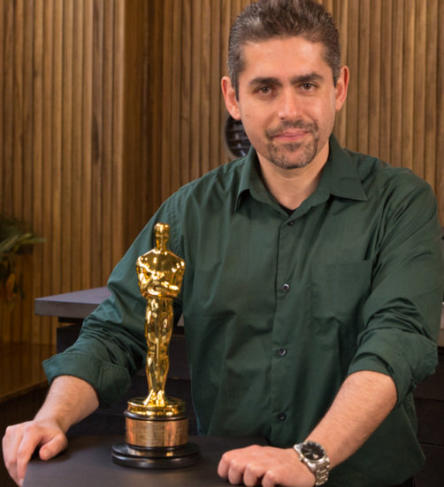
Gianluca, where did the idea of writing a book about lenses come from? Why did you feel the need to
put this knowledge down on paper?
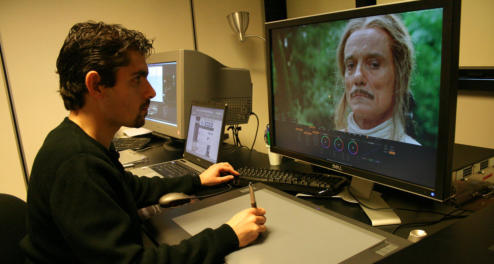
There are already plenty of books about cinema lenses and optical phenomena, so my motivation certainly wasn't driven by a lack of resources in the field. My reasons were both personal and practical. First and foremost, there's my enormous passion for cinema, cinematography and photography. But there's also the fascinating thought that these highly technical and technologically sophisticated tools are ultimately used to tell stories that end up on a screen and move an audience. And yet, everything passes through a lens and a camera. That's what fascinated me from an early age. I discovered this world by visiting film sets from the age of three, thanks to my father, a well-known Italian production designer. Later, I attended film screenings organised by my local parish film club in Rome, followed by my studies at the European Academy of Special Effects, directed by Academy Award winner Carlo Rambaldi. My journey is described in detail, and with a touch of humour, in the introduction to the book. Who did you have in mind while writing the book: VFX artists in general, cinematographers, or anyone who works with images? What do you think is missing from the resources currently available? Having worked in this industry for more than 25 years, I've met countless interesting people who share my passion and have an impressive level of technical expertise. I've also met many directors who, while artistically accomplished, clearly lacked a sufficient technical background. I believe filmmakers should have an in-depth understanding of their expressive tools when telling a story. Think of a painter who chooses one brush over another to achieve different strokes, textures and nuances in a painting. A painter needs to know their brushes and tools.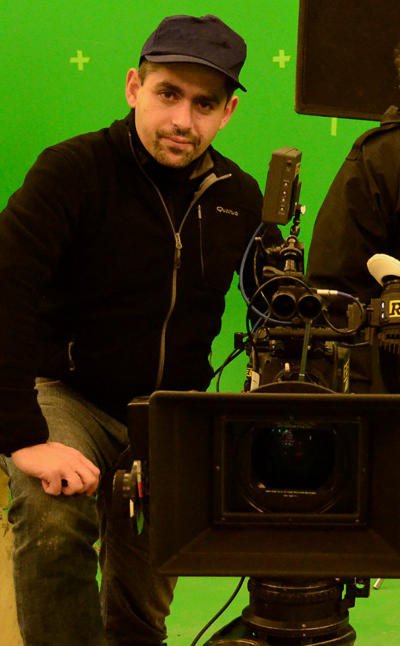
Ultimately,
an
artist's
job
is
to
translate
what's
in
their
mind
into
something
tangible,
so
that
it
can
be
visualised,
brought
to
life
and
shared
with
others.
The
same
applies
to
cinema.
A
director
needs
to
understand
the
camera,
just
as
they
need
to
understand
their
‘eye’
—
in
other
words,
the
lens.
Many
of
the
world's
most
talented
and
celebrated
directors
have
a
profound
understanding
of
their
medium
and
a
genuine passion for the technical side of filmmaking.
Then
there
are
visual
effects
artists,
the
category
I
belong
to.
Here,
too,
I've
met
many
outstanding
artists.
But
I've
also
discovered
that
a
great
many
others
have
no
natural
passion
for
photography
or
the
visual
arts
in
general.
They
tend
to
approach
visual
effects
almost
mechanically,
working
on
shots
simply
to
make
them
look
better.
They
often
don't
even
ask
which
lens
was
used
to
shoot
a
particular
shot,
let
alone
consider
the
characteristics
of
that
specific
lens.
Learning
to
click
through
the
tools
in
a
graphics
application
until
you
achieve
a
result
is
one
thing.
Understanding
what's
behind
an image and the story it tells is quite another.
I
feel
there's
still
a
gap
between
the
world
of
production
and
the
world
of
post-production.
Each
side
knows
a
little
—
or
assumes
it
knows
—
about
what's
happening
on
the
other side. In my view, however, these two worlds still don't communicate enough.
It's
nobody's
fault
in
particular.
It's
the
result
of
a
dialogue
that
never
properly
happened
because
a
bridge
was
never
built.
In
some
cases,
it
may
also
stem
from
the
dangerous
and
unproductive assumption that one already knows everything, combined with a degree of negligence.
This happens on both sides.
Sometimes
cinematographers,
directors
and
other
crew
members
make
decisions
on
set
without
fully
considering
the
implications
for
post-production.
They
assume
everything
can be fixed almost automatically later, or they fail to give the on-set VFX Supervisor enough time to ensure a shot will work properly, capture the necessary data and so on.
On
the
other
hand,
in
post-production,
there's
often
a
tendency
to
look
at
a
shot
as
a
problem
to
be
solved,
without
asking
why
a
particular
aesthetic
decision
was
made
in
the
first
place.
Visual
effects
companies,
increasingly
squeezed
by
shrinking
budgets
and
overwhelmed
by
workloads,
sometimes
fail
to
provide
their
artists
with
important
technical
information about the production history of a particular shot. Instead, they present it simply as a problem that needs fixing.
I've
also
often
heard
artists
criticise
how
a
scene
was
shot,
confidently
declaring
how
they
would
have
done
it
themselves
if
they'd
been
on
set.
What
they
may
not
realise
is
that
the
crew
could
have
worked
incredibly
hard
to
capture
the
shot
as
effectively
as
possible,
given
the
technical
challenges,
camera
equipment,
lens
choices
and
logistical
constraints of the set. Such judgements are often rooted in a complete lack of foundational knowledge of cinematography.
Ultimately,
I've
also
discovered
that
many
filmmakers
are
unfamiliar
with
certain
characteristics
of
cinema
lenses.
As
a
result,
they
may
be
missing
opportunities
to
tell
their
stories in a more personal and distinctive way.
In
the
age
of
digital
cinematography,
where
the
immediacy
of
the
visual
result
is
an
undeniable
convenience,
it's
become
relatively
rare
to
capture
a
shot
that's
technically
wrong.
But that doesn't automatically make us complete cinematographers or filmmakers.
A
deeper
understanding
of
our
tools
allows
us
to
achieve
an
even
more
compelling
aesthetic
result
than
a
simple,
sterile,
razor-sharp
digital
image.
As
I
mentioned,
there
are
plenty
of
educational
resources
on
cinematography.
However,
I've
noticed
that
many
delve
too
deeply
into
the
technical
details
of
optical
engineering,
moving
away
from
the
practical knowledge an artist actually needs.
My
book
does
cover
some
optical
principles,
but
without
going
overboard
or
getting
lost
in
engineering
details,
simply
because
that's
not
what
an
artist
needs.
If
you
want
to
build
a career as an optical engineer, this isn't the right book for you. Every subject, including the more technical ones, is approached from the perspective of its aesthetic impact.
The
book
is
also
interactive,
allowing
readers
to
access
high-resolution
content
from
a
repository,
including
still
frames
and
video
footage,
captured
using
more
than
80
lenses
that I tested while writing the book, across several different camera systems.
So, in a nutshell, this book is intended for anyone working creatively with the cinematic image.
Do
you
remember
the
first
time
you
realised
how
radically
a
lens
could
change
the
look
of
an image?
There
wasn't
really
a
single
defining
moment.
I'd
say
I'm
a
cinema
enthusiast,
and
when
watching
a
film,
I
can
recognise
when
an
image
genuinely
moves
me
—
perhaps
because
the
technical
choices,
combined with the camera angle, successfully convey a powerful emotion.
I
love
Steven
Spielberg's
films.
He's
exactly
the
kind
of
director
I
was
referring
to
earlier:
someone
with
a
profound
understanding
of
cinematography,
which
is
clearly
evident
in
his
mastery
of
visual
storytelling.
I
still
remember
certain
shots
in
Indiana
Jones
where
the
use
of
rack
focus
and
depth
of
field
gives
action sequences extraordinary impact.
Then
there's
Schindler's
List,
where
the
decision
to
shoot
in
black
and
white
was
incredibly
effective.
I'm
also
struck
by
the
way
the
film
highlights
the
tragedy
experienced
by
children
during
the
Holocaust
through
delicate
compositions
and
shifts
in
focus.
We
also
see
a
little
girl
who,
despite
not
having
a
central
role
in
the
story,
manages
to
create
an
incredibly
powerful
emotional
impact. To me, that's perfect cinema: shots created with a clear understanding of both the technical medium and the visual and emotional language of filmmaking.
I
could
also
mention
Saving
Private
Ryan,
where
the
use
of
a
narrow
camera
shutter
angle
makes
the
images
even
more
dramatic,
frantic
and
stroboscopic.
It
helps
recreate
a
battlefield that feels more real than cinematic.
It was a deliberate creative choice.
Why is it so important for VFX artists to know which lens was used to shoot a scene?
First
of
all,
when
working
with
moving
images
and,
for
example,
inserting
a
computer-generated
element
into
a
shot,
the
first
stage
is
camera
tracking.
This
involves
reconstructing
the
camera's
movement
in
order
to
generate
a
digital
camera
that
CG
artists
can
use
in
their
animation
software.
This
ensures
that
the
generated
elements
adhere
correctly
to
the
original
footage
—
in
other
words,
that they appear properly anchored to the image.
Before
this
stage,
however,
it's
essential
to
know
which
lens
was
used
during
filming,
its
focal
length,
the camera model and the sensor size.
These
details,
together
with
special
footage
of
distortion
grids,
are
needed
to
temporarily
remove
lens distortion during the animation and rendering stages.
What are the most common mistakes you see VFX artists make when trying to replicate the behaviour of a lens?
Lens characteristics such as field curvature, coma and even anamorphic compression often work together to create a lens's distinctive look.
Many
artists,
however,
simply
try
to
imitate
the
overall
appearance
without
realising
that
what
they're
seeing
may
be
the
result
of
several
different
optical
phenomena
interacting
with one another.
Understanding these phenomena can make a significant difference to a digital artist's approach to creating a visual effect.
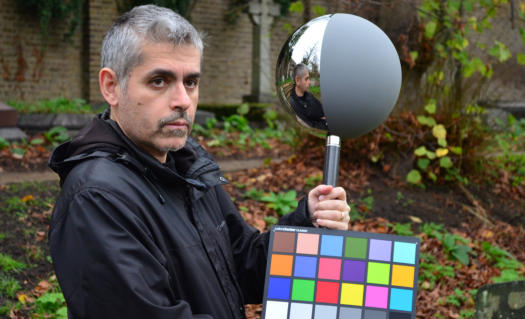
How
much
of
an
image's
cinematic
character
comes
from
the
lens,
and
how
much comes from lighting, the sensor and exposure?
Cinematography
is
a
collaborative
art,
and
this
applies
both
to
the
many
professionals
involved
in
the
creative
and
technical
process
and
to
the
technology
itself.
I
always
like
to use this comparison when talking about cinematography.
Lighting,
sensor
type
and
size,
exposure,
the
use
of
filters
and
many
other
factors
all
contribute to the overall look of an image. Every one of them matters.
The
book
contains
several
chapters
devoted
specifically
to
the
creative
side
of
cinematography and to the different tools available to shape a shot.
Beyond
the
lenses
themselves,
which
obviously
play
a
major
role
in
creating
a
visual
look, sensor size and the final delivery and projection format are also fundamental.
During compositing, artists then reapply the corresponding distortion to the rendered CG elements so that they integrate correctly into the original image, or plate.
But
that's
only
the
most
basic
and
straightforward
aspect
of
the
process.
There
are
many
other
lens
characteristics
that
need
to
be
recreated
and
applied
to
computer-generated
imagery to achieve seamless integration with the lens used for filming. We explore these aspects in the book, too.
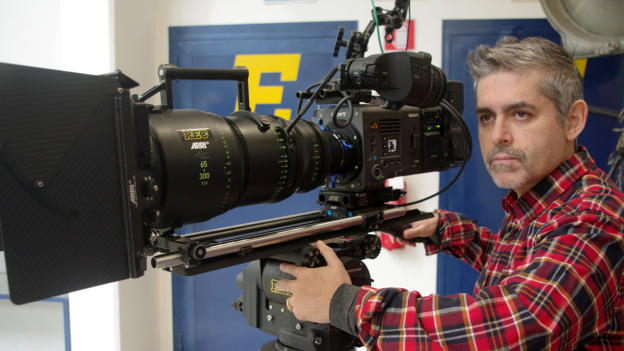
Sensor
size,
for
example,
can
influence
depth-of-field
behaviour,
which
means
depth
of
field
doesn't
depend
solely
on
focal
length.
With
today's
large-format
camera
systems,
it's
possible to achieve shots with several distinct planes of focus that appear even more three-dimensional, as well as shallower depth of field.
These characteristics are particularly appealing for intimate scenes or situations where the story calls for greater separation between characters and the background.
The
capture
and
projection
format
also
plays
a
role.
Most
films
we
see
in
cinemas
use
a
widescreen
format,
but
a
more
square
aspect
ratio
may
be
appropriate
when
verticality
is
a fundamental element of the story. Naturally, this also affects composition and even the required accuracy and scale of production design, among other things.
How
important
is
it
to
distinguish
a
lens-related
issue
from
a
lighting
problem
when
creating
visual
effects?
How
does
your
knowledge
of
lenses
influence
your
decisions
when
supervising
a
VFX sequence?
Whenever
I
go
on
set
as
a
VFX
Supervisor,
I
always
make
sure
to
find
out
well
in
advance
which
cameras
and
lenses will be used.
If
you
can
establish
a
good
working
relationship
with
the
Director
of
Photography
and
the
camera
team,
it's
also
worth
discussing
whether
a
particular
lens
or
shooting
technique
is
appropriate
for
the
planned
post-
production work or the effect being created.
I'm
the
kind
of
supervisor
who
wants
to
have
all
the
relevant
data
available
and
avoid
surprises
on
set
—
or
at least minimise them, because there will always be a few.
Having
a
supervisor
on
set
is
particularly
important
because,
for
example,
despite
blue
screens
having
been
used
since
the
1940s,
there's
still
a
great
deal
of
negligence
and
inconsistency
when
it
comes
to
lighting
them.
It's
true
that
today's
digital
tools
allow
us
to
remove
blue
screens
more
easily
and
accurately.
However,
that
doesn't
diminish
the
importance
of
having
a
blue
or
green
screen
that
is
properly
and
evenly
lit, positioned at the right distance from the actors, and free from obvious seams, patches or repairs.
These
issues
can
slow
down
rather
than
speed
up
the
VFX
process
and,
ultimately,
affect
the
quality
of
the
final
result.
I
can't
mention
any
specific
films,
but
I've
worked
on
scenes
shot
inside
large
sound
stages
with
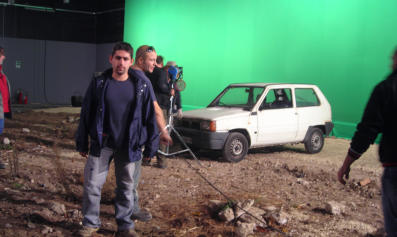
blue or green screens, intended to look as though they took place outdoors.
Unfortunately,
many
cinematographers
struggle
to
visualise
the
final
appearance
of
such
scenes
and
tend
to
light
the
actors
in
a
somewhat
theatrical
way.
The
key
light
can
end
up
being
far
too
obvious,
hard
and
directional,
undermining
the
illusion
that
the
actors
are
standing
in
an
outdoor
environment.
The
distance
between the actors and the screen is also often underestimated.
At
a
certain
size,
the
screen
itself
becomes
a
substantial
light
reflector.
In
all
these
situations,
consulting
the
VFX
Supervisor
and/or
VFX
Cinematographer
is
crucial.
Just
imagine
what
it
means
in
post-production
to
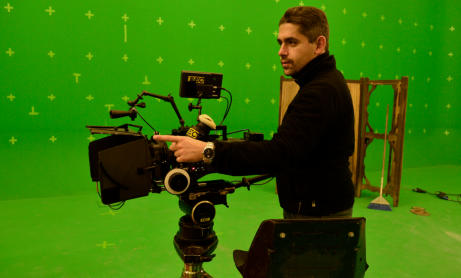
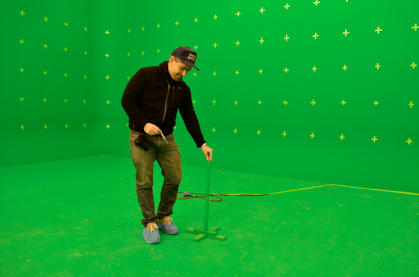
have
to
correct
the
lighting
on
the
actors
before
they
can
be
convincingly
integrated
into
a
background
added
later.
There
are
other
considerations,
too.
Modern
cameras
and
lenses
can
record
metadata
and
other
information
that
is
useful
to
VFX
artists,
provided
it
is
communicated
properly.
However,
certain
details
can
cause
problems
in
post-
production if they aren't documented adequately.
For example, consider the use of an additional Diopter or a Lens Extender. These details can easily be overlooked during filming, and they aren't normally recorded by the camera.
As
a
result,
the
effective
focal
length
of
a
shot
and
its
depth
of
field
may
differ
from
what
you
would
expect
based
on
the
lens's
nominal
focal
length.
The
depth
of
field
may
also
be altered. This can create problems during camera tracking, potentially leading to an inaccurate result because we're unaware of the underlying cause.
That's just one small example of an issue I discuss in much greater depth in the book.
Distortion,
chromatic
aberration,
vignetting,
bokeh,
breathing
and
fall-off:
which
of
these
phenomena is most often overlooked?
I'd
say
these
characteristics
are
often
not
properly
captured
or
profiled.
In
reality,
several
techniques
can
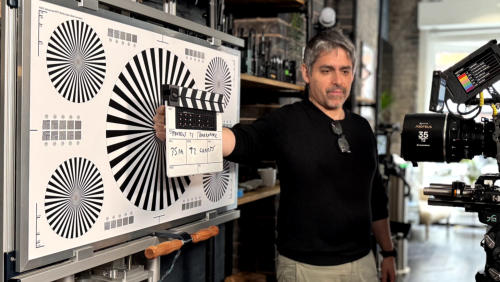
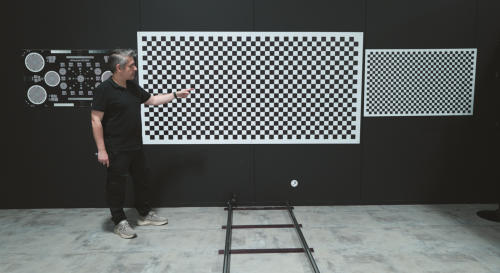
be used to create a kind of digital profile of a lens, and I describe them in the book as well.
Of
course,
much
depends
on
whether
you
can
test
the
lenses
before
the
film
shoot
begins.
I
consider
this
extremely important.
In
my
view,
it's
essential
to
understand
the
eye
through
which
you'll
be
seeing
the
scenes
you're
going
to
work
on.
Every
lens
is
different,
even
when
it's
the
same
brand,
model
and
focal
length.
That's
why
it's
always
worth
arranging
a
lens-testing
session
before
shooting
begins,
ideally
alongside
the
tests
that
cinematographers and camera assistants routinely carry out before heading to set.
Take
lens
breathing,
for
example.
It's
particularly
noticeable
in
vintage
lenses
and
many
anamorphic
lenses.
If
we're
working
on
shots
that
involve
focus
pulls
and
need
CG
elements
added
to
them,
lens
breathing is something we'll have to account for.
Once
again,
lens
testing
can
help
us
establish
values
to
use
in
post-production
to
simulate
the
focus-
breathing ratio and reproduce it digitally on CG elements.
Bokeh
is
another
important
aesthetic
characteristic
of
a
lens.
Its
shape,
internal
texture
and
softness
should ideally be recreated using dedicated lens tests. I discuss some of these techniques in the book.
Bokeh
is
such
a
distinctive
visual
feature
that
cinematographers
may
choose
particular
lenses
specifically for their out-of-focus rendering. Naturally, they expect CG elements to exhibit the same look.
Can we truly recreate the character of a real lens digitally, or will something always be lost? Could AI convincingly simulate a lens's behaviour without
actually understanding the underlying physics?
We're
still
some
way
from
achieving
highly
faithful
lens
profiling
using
traditional
techniques.
One
reason
is
that
the
major
lens
manufacturers
are
still
exploring
how
best
to
provide digital data that allows these characteristics to be recreated and simulated without making the process excessively complex, expensive or time-consuming.
This is a crucial consideration. If the process becomes too complicated, people may simply decide not to undertake it at all.
That would mean some lens characteristics would continue to be simulated manually, essentially by eye.Some optical characteristics are extremely difficult to measure.
Obtaining
perfectly
accurate
data
can
sometimes
require
examining
and
measuring
the
internal
components
of
a
lens
—
which
isn't
a
viable
option
—
or
designing
specialised
devices
and
methodologies
to
extract
the
necessary
information.On
the
other
hand,
some
machine-learning
tools
are
beginning
to
offer
interesting
alternatives
and
possibilities,
particularly algorithms based on look transfer.
Essentially,
you
can
train
a
system
on
the
aesthetic
characteristics
of
a
particular
lens
and
then
transfer
that
look
to
another
image.I've
personally
tried
and
tested
some
of
these
tools,
and
I
have
to
say
they're
promising.
However,
the
ones
I've
tested
were
general-purpose
simulators
based
on
specific
lenses
that
users
can
select.But
what
happens
when you need to train a look-transfer system for a particular set of lenses on a specific project?
How
long
would
it
take,
and
who
would
be
responsible
for
doing
it?
At
present,
there
are
still
many
questions
to
answer
and
workflows
to
develop
before
we
can
provide
definitive answers.
We understand that you've also worked as a VFX Cinematographer on film and advertising
productions. What does the role involve?
The
title
VFX
Cinematographer
is
particularly
appropriate
for
someone
with
a
solid
background
in
cinematography
and
camera
technology,
an
in-depth
understanding
of
cinema
lenses,
and
knowledge
of how they influence the final result in compositing and CGI.
For
example,
if
a
professional
works
on
set
alongside
the
Director
of
Photography
(DoP)
to
define
lens
choices,
monitor
image
characteristics,
capture
tracking
data
and
ensure
the
proper
integration
of
CG
elements, the term VFX Cinematographer accurately describes their area of expertise.
If
that
person
also
leads
the
entire
VFX
department
and
oversees
its
creative
and
technical
decisions,
VFX Supervisor with a specialisation in cinematography might be a more precise title.
It's
essentially
a
technical
support
role
that
requires
an
in-depth
understanding
of
post-production
and
visual
effects,
as
well
as
cinematography.
It
sits
very
close
to
the
role
of
a
VFX
Supervisor
and
can
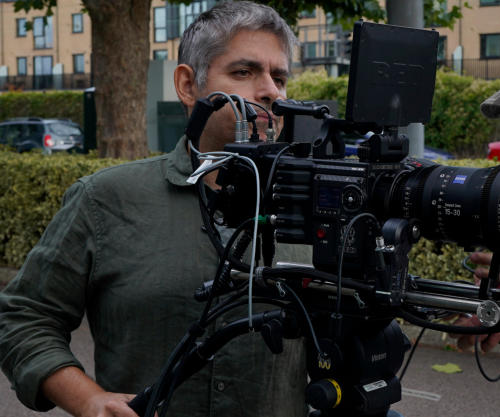
be crucial on sets where specific scenes require extensive visual effects.
In
my
view,
the
VFX
Cinematographer
should
have
a
particularly
close
working
relationship
with
the
lead Director of Photography.
They
should
be
able
to
advise
on
matters
such
as
lighting
green
or
blue
screens
in
relation
to
the
actors
and
production
design,
while
also
anticipating
and
recommending
shooting
techniques
that
make
the
footage
effective
not
only
from
a
storytelling
perspective
but
also
in
terms
of
VFX
production.
Some
VFX
Cinematographers
may
also
be
asked
to
manage
and
shoot
scenes
themselves,
particularly
those handled by a splinter unit or second unit.
Personally,
whenever
possible,
I
prefer
to
discuss
and
share
ideas
about
lighting
and
aesthetics
with
the
lead
Director
of
Photography,
so
that
we
can
establish
the
key
visual
and
technical
aspects
of
the
shoot together.
Optical
imperfections
are
often
considered
flaws
that
need
correcting.
When
do
they
become
part
of
an
image's
beauty?
Is
there
a
difference
between
a
technically
correct
image
and one that genuinely feels cinematic?
That's
a
wonderful
question.
While
writing
this
book,
I've
tested
a
great
many
lenses,
and
I'll
continue
testing
them
for
Cinematically
to
keep
up
with
developments
in
cinema
technology.
Throughout
this
process,
I
can't
say
I've
encountered
a
lens
I'd
consider
inherently
worse
than
another.
Each
has
its
own
identity
within
the
context
for
which
it
was
designed,
and
each
may
have
a
place
in
a
particular
kind
of
storytelling.
Sometimes,
lenses
that
are
considerably
less
expensive
than
others
can
produce
a
much
more
interesting look for the visual result you're trying to achieve.
Technical
perfection
and
the
intrinsic
quality
of
a
lens
don't
always
guarantee
the
best
outcome.
It
ultimately
depends
on
the
story
you're
telling.
For
some
projects,
a
geometrically
perfect,
high-contrast
lens
with
extraordinary
sharpness
may
be
absolutely
appropriate.
In
other
contexts,
we
might
want
precisely the opposite.
Let
me
give
you
a
simple
example.
For
a
period
drama,
I
might
favour
a
visual
aesthetic
built
around
lenses
that
produce
a
more
organic
image
and
render
skin
tones
in
a
softer,
more
flattering
way,
enhancing
the
romantic
and
ethereal
qualities
of
certain
characters.
The
same
might
apply
to
a
fairy
tale
or
a
romantic
fantasy.
In
some
cases,
certain
aberrations
can
even
help
give
a
film
an
older,
more
period-
specific appearance.
I'm
reminded
of
the
series
Downton
Abbey,
which
used
Cooke
S4
lenses,
known
for
their
somewhat
classic
look
and
warm
rendering,
with
strong
yet
gentle
microcontrast.
Then
there's The Crown, where Cooke Speed Panchro lenses were used for their low-contrast character and softness.
I could also mention We Live in Time, the 2024 British romantic drama, which used Panavision PVintage lenses to achieve a very soft, natural look and avoid excessive sharpness.
For science fiction or a crime thriller, I might instead opt for sharper, higher-contrast lenses.
One
example
that
comes
to
mind
is
Season
1
of
Black
Doves,
where
the
cinematographer
used
Panavision
Panaspeed
lenses,
known
for
their
high
definition,
rich
detail
and
pronounced
contrast.
Ultimately,
the
type
of
storytelling
determines
the
choice.
For
a
sharper,
more
hard-edged
story,
I'd
favour
a
sharper
look.
For
something
romantic,
fantastical
or
perhaps
a
comedy
with
more
nuanced
characters,
I
might
choose
a
softer
lens.
Of
course,
these
so-called
rules
can
be
completely
overturned
when
you're
deliberately pursuing a different aesthetic.
The
same
applies
to
the
choice
between
spherical
and
anamorphic
lenses.
By
virtue
of
their
optical
design
and
visual
characteristics,
anamorphic
lenses
are
often
well
suited
to
productions
featuring
expansive
environments
and
landscape
shots.
But
they
can
also
be
used
in
confined
spaces,
with
the
deliberate
intention
of
creating
claustrophobia,
unease, an otherworldly atmosphere or, in more extreme cases, a sense of hallucination.
We
discuss
these
kinds
of
aesthetic
decisions
in
the
book,
and
some
of
the
cinematographers
I
interviewed
for
the
final
chapter
also
share
their
personal
perspectives
on
the
subject.
How much should VFX artists know about lenses compared with people working on set?
As I've already mentioned, I believe it's essential to understand the entire image-capture process, not just
the lenses but also the cameras and the rigs used to mount them and execute camera movements.
This doesn't apply exclusively to VFX artists. Every department involved in visual storytelling should have
a good understanding of cinematography, albeit at different levels.
Even in production design and costume design, when choosing a fabric for a set or selecting an actor's
wardrobe, it's important to consider not only how well it fits the story and narrative but also how it will
appear on screen under the lighting being used.
It would also be valuable to maintain close communication with the Director of Photography, who might
be considering low-contrast or high-contrast lenses. That decision can have a significant influence on the
choice of colours, fabrics and even furniture for a particular environment. When I think of Guillermo del Toro's most recent Frankenstein, I remember visiting the exhibition of
props, makeup and costumes from the film here in London. The meticulous study of the colour palette in relation to the atmosphere of the cinematography and the lighting was
truly what gave the film's overall aesthetic its distinctive identity.
The same applies to visual effects artists. We work in film and television, so I believe a solid understanding of aesthetics and cinematography is absolutely fundamental. And by
cinematography, I mean not only camera technology but also the lighting of actors and sets.
How important is it to understand the physics behind an image compared with relying on visual experience and artistic intuition?
It's enough to say that you need to know the rules before you can break them. You can experiment with any kind of creative expression or aesthetic deviation you like, but you
first need to understand the fundamentals. I believe this applies to every form of artistic creation.
With the evolution of digital cameras, has the character of lenses become more or less important?
The
character
of
a
lens
and
the
choice
of
which
lens
to
use
have
always
been
fundamental
to
cinematic
storytelling,
ever
since
film was the only way to shoot a movie.
Back then, people often looked for the sharpest lenses available to compensate for the softness inherent in film.
With
digital
cinematography,
the
trend
has
reversed.
We're
now
looking
for
lenses
with
less-than-perfect
characteristics
to
add
texture
to
digital
images,
which
can
seem
almost
too
perfect
because
of
increasingly
advanced
sensors.
The
aim
is
to
make
images feel more optical and filmic rather than precise and sterile.
Film,
as
a
visual
medium,
has
a
set
of
aesthetic
characteristics
that
we've
all
absorbed
into
our
perception
of
cinema.
They
allow
us to distinguish a film almost immediately from a documentary, a music video or a commercial.
When
we
see
an
image,
we
often
recognise
straight
away
whether
it
belongs
to
a
film,
not
only
because
of
the
composition
but
also because of its aesthetic character — what we describe as cinematic.
And
that
look
is
often
anything
but
visually
perfect
or
precise.
In
fact,
sometimes
the
softer
and
less
sharply
defined
an
image
is,
the
more
authentic
it
feels.
It's
a
little
like
painting.
Imagine
a
painter
achieving
such
technical
perfection
that
they
can
recreate
a
scene
so
realistically
that
it
looks
like
a
photograph.
We'd
certainly
appreciate
their
technical
skill,
but
we'd
probably
still
be
more
drawn
to
Caravaggio's
depiction
of
people
and
environments,
with
his
distinctive
painterly,
almost
cinematic
and
dreamlike
quality.
Today,
almost
any
optical
effect
can
be
added
digitally.
Do
you
think
this
has
improved
the
work
of
VFX
artists,
or
does
it
risk
making
them
less
attentive
to
the
original
cinematography?
I
think
this
capability
becomes
dangerous
when
a
digital
artist
stops
asking
whether
they're
actually
reproducing
the
optical
characteristics
of
a
lens
and
simply
takes
it
for
granted
that
they'll
be
able
to
do
so.
It's
true
that
visual
effects
now
allow
us
to
do
practically
anything.
But
it's
essential
to
maintain
a
critical
eye,
learn
to
observe
the
world
around
us,
understand
how
things
behave
and
how
light
works
—
and,
above all, study how the world looks through a camera.
Cinema
is,
of
course,
an
illusion,
it’s
fiction.
Directors
sometimes
deliberately
bend
the
rules
to
make
their
images
more
cinematic.
That
doesn't
necessarily
mean
making
them
realistic
or
mathematically
accurate,
but
rather
making
them
serve
the
visual
narrative
and
enrich
the
aesthetic
result.
Personally,
the
first
thing
I
always
ask
my
VFX
artists
to
do
before
starting
work
on
a
shot
is
to
understand
its
visual
geography.
That
means
identifying
the
direction
of
the
key
light,
understanding
the
optical
characteristics
of
the
lens
used,
analysing
areas
of
the
image
containing
reflections,
highlights
and
shadows
and
studying
the camera movement, among other things.
So,
to
answer
your
question,
I
believe
it's
vital
for
VFX
artists
to
understand
cinematography
and,
in
particular, to be familiar with what was actually captured on set.
From
this
perspective,
we
supervisors
use
various
techniques
during
production
to
collect
different
kinds
of
data,
photographs
and
reference
images
that
will
be
useful
in
post-production
and
help
artists
understand
the
geography
of
the
set
as
if
they
had
been
there
themselves.
I
discuss
these
techniques
extensively in the book, too.
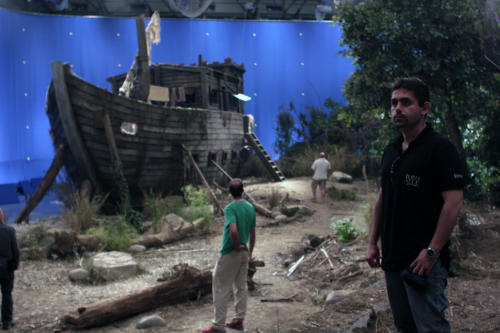
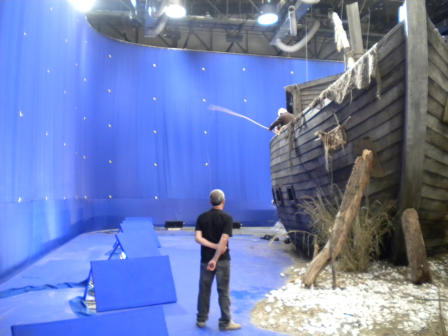
With
AI
tools
capable
of
generating
or
modifying
images,
how
important
will
it
remain
to
understand
how
a
real
lens
behaves?
Could
knowledge
of
optics
become an even greater advantage in a world where images are increasingly easy to generate?
Artificial
intelligence
tools
used
in
the
arts
learn
from
the
material
we
feed
them.
If
one
day
we
were
no
longer
able
to
provide
them
with
new
ideas,
creativity
and
knowledge
— or simply stopped doing so — these tools would have no choice but to recombine existing information. That could lead to aesthetic homogenisation.
And
if
machines
continued
learning
from
that
increasingly
homogenised
aesthetic,
we
could
end
up
witnessing
a
form
of
regression.
My
point
is
that
human
creativity
is
what
moves the world forward, and this applies far beyond the arts.
Returning
to
your
question,
I
don't
believe
images
are
necessarily
easy
to
generate.
Or
rather,
generating
them
has
certainly
become
technically
easier
for
people
who
previously lacked the ability or knowledge to do so. Today, anyone can generate an image, but that doesn't automatically make them a director or filmmaker.
The idea always matters, as does the artistic training that gives you the tools to bring it to life.
What
worries
me
a
little
is
the
possibility
that,
when
an
artist
cannot
recreate
what's
genuinely
in
their
mind,
they
might
eventually
settle
for
whatever
an
AI
tool
produces
simply because it's the best result they can get.
Becoming
creatively
lazy
and
accepting
compromises
could
be
the
beginning
of
an
aesthetic
decline
in
the
arts.
And
that
would
be
a
bitter
punishment
we'd
have
inflicted
on
ourselves, regardless of the technology.
I understand cinematography — and always will — as a collaborative art form in which direct contact with the physical world is the only truly meaningful way to learn.
I
also
believe
in
sharing
knowledge
and
interacting
with
other
artists.
This
is
an
invaluable
source
of
richness
that
makes
a
film
more
compelling
and
convincing.
The
same
applies to technical knowledge.
If
one
day
we
all
end
up
confined
to
our
homes,
making
films
on
our
computers,
we'll
not
only
face
a
global
glut
of
content
and
projects
that
nobody
will
ever
watch;
I'm
also
convinced
we'll
lose
many
of
the
aesthetic
qualities
that
define
cinematography.
That's
simply
because
new
generations
of
artists
may
never
have
worked
on
a
set
or
experienced the characteristics of real camera systems firsthand.
The risk is that we abandon our aesthetic heritage and replace it with images that feel sterile and increasingly similar to one another.
What
technical
skills
do
you
think
will
be
essential
for
VFX
artists
over
the
next
ten
years?
Certainly,
learning
how
to
use
AI
tools
and
adapt
them
to
your
own
creative
needs
will
be
the
next
step.
AI
is
already
here.
It's
no
longer
even
new,
so
learning
to
embrace
these
tools
from
a
technical
perspective while maintaining a critical and objective eye is absolutely essential.
Some
artists
are
strongly
opposed
to
these
systems
because
they
fear
being
replaced.
But
technological
progress
is
inevitable,
and
failing
to
keep
up
with
this
revolution
means
being
left
behind.
In
that
case,
we'd
be
putting
ourselves
out
of
the
market,
rather
than
the
technology
itself
doing it for us.
We
need
to
learn
how
to
evolve
our
work
and
technical
abilities.
In
some
cases,
new
and
innovative
opportunities may even emerge that improve our professional standing.
That said, the visual effects industry has been using machine-learning tools for some time in certain stages of production, sometimes with remarkably useful results.
However, there is a problem with becoming fixated on them.
I'm
referring
to
artists
who
insist
on
using
AI
tools
simply
because
they're
fashionable,
because
they
believe
they're
now
the
only
viable
solution,
or
perhaps
because
they
lack
proficiency
in
some
traditional
VFX
techniques.
This
can
end
up
undermining
productivity.
Using
machine-learning
systems
often
amounts
to
a
gamble:
you
try
something
and
hope you're lucky enough to get an acceptable result after a few iterations.
But when it doesn't work, persisting with the same approach simply wastes working time. AI should make us faster, not slower! Otherwise, it becomes a paradox.
That's
why,
when
I'm
supervising
visual
effects
work
at
a
company,
I
always
tell
artists
who
want
to
experiment
with
machine-learning
techniques
to
give
themselves
no
more
than an hour and a half. If the results aren't promising by then, they should return to traditional methods.
Otherwise,
productivity
and
the
company's
production
schedule
will
suffer.
If
you
multiply
the
hours
wasted
pursuing
unsuccessful
AI
solutions
across
all
the
artists
involved
in a production, you end up throwing away a considerable amount of money.
There
have
been
reports
of
visual
effects
companies
having
to
hire
large
numbers
of
artists
to
fix
work
that
artificial
intelligence
has
done
badly.
Is
the
world
turning
upside
down?
Are
we
handing
creativity
over
to
machines
and
turning
ourselves
into
fixers?
Wasn't
it
supposed
to
be
the
other
way
around?
Weren't
these
tools
meant
to
help
us
work more efficiently?
That's
why
I
believe
AI
must
be
adapted
to
our
actual
needs
rather
than
becoming
an
obsession
for
artists.
Above
all,
we
need
to
learn
how
to
train
and
direct
these
tools
—
and train ourselves to use them properly — so that we can achieve the aesthetic quality we're aiming for. Nothing less. We must avoid compromising our standards.
By the way, in professional filmmaking, the level of detail is extraordinarily high. Nobody can afford to settle for a visual solution that doesn't work properly.
What's the one idea you hope readers will remember after finishing the book?
A passion for the film image.
Which subject required the most research or was the most difficult to explain?
Probably
astigmatism.
It's
an
optical
aberration
that
can
occur
in
a
lens,
but
it's
difficult
to
find
in
practice and also quite complex to explain.
We've
noticed
that
the
book
cover
says
"Volume
1".
Should
we
expect
a
Volume
2?
Is
there
another subject you'd like to explore in greater depth or turn into a new book?
Oh,
there
are
still
so
many
things
to
add
—
things
I
might
even
have
included
in
Volume
1,
because
cinematography
is
constantly
evolving
and
changing.
But
I
would
have
needed
more
than
a
thousand
pages!
That's one of the reasons this website now exists, too.
The
idea
is
to
create
a
point
of
reference
for
filmmakers,
cinematographers
and
VFX
artists,
where
they can share their passion for cinematography and explore its technical side.
We'll test lenses and talk about equipment and technology. At least, that's the plan!
Beyond
that,
there
will
certainly
be
a
Volume
2
of
Cinematically.
This
time,
the
focus
will
be
more
specifically on cinematic language and shot composition.
That,
too,
comes
from
a
passion
I've
had
since
childhood:
keeping
a
little
notebook
in
which
I'd
write
down all the interesting shots I came across while watching films.
The
second
volume
will
therefore
focus
more
closely
on
visual
storytelling
through
the
language
of
cinematography and composition.
It's
a
style
that
feels
more
expressive
and
authentic
than
merely
precise
and
descriptive.
For
example,
when
I
visit
the
National
Gallery,
I
love
Canaletto's
highly
realistic
depictions of Venice, with their extraordinary level of visible detail. He's one of my favourite painters.
Then
I
move
on
to
Caravaggio
or
Rembrandt.
Even
though
everything
feels
softer
and
more
painterly,
and
the
lighting
is
far
more
atmospheric,
their
work
still
feels
more
authentic and alive to me. It's difficult to explain exactly what cinematic means because it's an aesthetic feeling that seems to be innate in all of us.
My point is that the renewed interest in a slightly more vintage look in cinema stems precisely from the desire to recapture that optical quality and sense of authenticity.
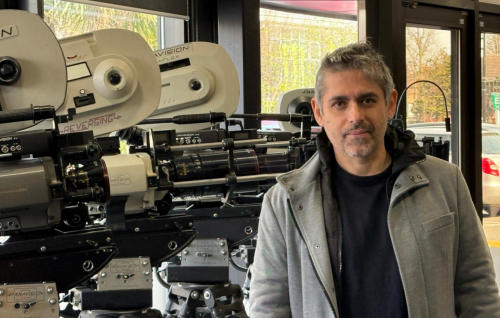
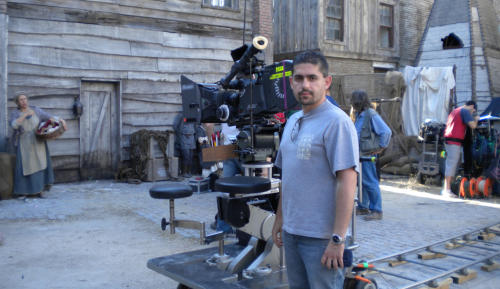
To learn more about Gianluca Dentici , please click here or visit his website www.gianlucadentici.com


Gianluca, where did the idea of writing a book about
lenses come from? Why did you feel the need to put this
knowledge down on paper?
There are already plenty of books about cinema lenses and optical phenomena, so my motivation certainly wasn't driven by a lack of resources in the field. My reasons were both personal and practical. First and foremost, there's my enormous passion for cinema, cinematography and photography. But there's also the fascinating thought that these highly technical and technologically sophisticated tools are ultimately used to tell stories that end up on a screen and move an audience. And yet, everything passes through a lens and a camera. That's what fascinated me from an early age. I discovered this world by visiting film sets from the age of three, thanks to my father, a well-known Italian production designer. Later, I attended film screenings organised by my local parish film club in Rome, followed by my studies at the European Academy of Special Effects, directed by Academy Award winner Carlo Rambaldi. My journey is described in detail, and with a touch of humour, in the introduction to the book.
Who
did
you
have
in
mind
while
writing
the
book:
VFX
artists
in
general,
cinematographers,
or
anyone
who
works
with
images?
What
do
you
think
is
missing
from
the resources currently available?
Having worked in this industry for more than 25 years, I've met countless interesting people who
share my passion and have an impressive level of technical expertise. I've also met many
directors who, while artistically accomplished, clearly lacked a sufficient technical background.
I
believe
filmmakers
should
have
an
in-depth
understanding
of
their
expressive
tools
when
telling
a story.
Think
of
a
painter
who
chooses
one
brush
over
another
to
achieve
different
strokes,
textures
and
nuances in a painting. A painter needs to know their brushes and tools.
Ultimately,
an
artist's
job
is
to
translate
what's
in
their
mind
into
something
tangible,
so
that
it
can
be
visualised,
brought
to
life
and
shared
with
others.
The
same
applies
to
cinema.
A
director
needs
to
understand
the
camera,
just
as
they
need
to
understand
their
‘eye’
—
in
other
words,
the
lens.
Many
of
the
world's
most
talented
and
celebrated
directors
have
a
profound
understanding
of
their
medium
and
a
genuine
passion
for
the
technical
side
of filmmaking.
Then
there
are
visual
effects
artists,
the
category
I
belong
to.
Here,
too,
I've
met
many
outstanding
artists.
But
I've
also
discovered
that
a
great
many
others
have
no
natural
passion
for
photography
or
the
visual
arts
in
general.
They
tend
to
approach
visual
effects
almost
mechanically,
working
on
shots
simply
to
make
them
look
better.
They
often
don't
even
ask
which
lens
was
used
to
shoot
a
particular
shot,
let
alone
consider
the
characteristics
of
that
specific
lens.
Learning
to
click
through
the
tools
in
a
graphics
application
until
you
achieve
a
result
is
one
thing.
Understanding
what's
behind
an
image
and
the
story
it
tells is quite another.
I
feel
there's
still
a
gap
between
the
world
of
production
and
the
world
of
post-production.
Each
side
knows
a
little
—
or
assumes
it
knows
—
about
what's
happening
on
the
other
side.
In
my
view, however, these two worlds still don't communicate enough.
It's
nobody's
fault
in
particular.
It's
the
result
of
a
dialogue
that
never
properly
happened
because
a
bridge
was
never
built.
In
some
cases,
it
may
also
stem
from
the
dangerous
and
unproductive
assumption that one already knows everything, combined with a degree of negligence.
This happens on both sides.
Sometimes
cinematographers,
directors
and
other
crew
members
make
decisions
on
set
without
fully
considering
the
implications
for
post-production.
They
assume
everything
can
be
fixed
almost
automatically
later,
or
they
fail
to
give
the
on-set
VFX
Supervisor
enough
time
to
ensure
a
shot will work properly, capture the necessary data and so on.
On
the
other
hand,
in
post-production,
there's
often
a
tendency
to
look
at
a
shot
as
a
problem
to
be
solved,
without
asking
why
a
particular
aesthetic
decision
was
made
in
the
first
place.
Visual
effects
companies,
increasingly
squeezed
by
shrinking
budgets
and
overwhelmed
by
workloads,
sometimes
fail
to
provide
their
artists
with
important
technical
information
about
the
production
history of a particular shot. Instead, they present it simply as a problem that needs fixing.
I've
also
often
heard
artists
criticise
how
a
scene
was
shot,
confidently
declaring
how
they
would
have
done
it
themselves
if
they'd
been
on
set.
What
they
may
not
realise
is
that
the
crew
could
have
worked
incredibly
hard
to
capture
the
shot
as
effectively
as
possible,
given
the
technical
challenges,
camera
equipment,
lens
choices
and
logistical
constraints
of
the
set.
Such
judgements
are
often
rooted
in
a
complete
lack
of
foundational knowledge of cinematography.
Ultimately,
I've
also
discovered
that
many
filmmakers
are
unfamiliar
with
certain
characteristics
of
cinema
lenses.
As
a
result,
they
may
be
missing
opportunities
to
tell their stories in a more personal and distinctive way.
In
the
age
of
digital
cinematography,
where
the
immediacy
of
the
visual
result
is
an
undeniable
convenience,
it's
become
relatively
rare
to
capture
a
shot
that's
technically
wrong.
But
that
doesn't automatically make us complete cinematographers or filmmakers.
A
deeper
understanding
of
our
tools
allows
us
to
achieve
an
even
more
compelling
aesthetic
result
than
a
simple,
sterile,
razor-sharp
digital
image.
As
I
mentioned,
there
are
plenty
of
educational
resources
on
cinematography.
However,
I've
noticed
that
many
delve
too
deeply
into
the
technical
details
of
optical
engineering,
moving
away
from
the
practical
knowledge
an
artist
actually needs.
My
book
does
cover
some
optical
principles,
but
without
going
overboard
or
getting
lost
in
engineering
details,
simply
because
that's
not
what
an
artist
needs.
If
you
want
to
build
a
career
as
an
optical
engineer,
this
isn't
the
right
book
for
you.
Every
subject,
including
the
more
technical ones, is approached from the perspective of its aesthetic impact.
The
book
is
also
interactive,
allowing
readers
to
access
high-resolution
content
from
a
repository,
including
still
frames
and
video
footage,
captured
using
more
than
80
lenses
that
I
tested
while
writing the book, across several different camera systems.
So, in a nutshell, this book is intended for anyone working creatively with the cinematic image.
Do
you
remember
the
first
time
you
realised
how
radically
a
lens
could
change
the
look
of
an image?
There
wasn't
really
a
single
defining
moment.
I'd
say
I'm
a
cinema
enthusiast,
and
when
watching
a
film,
I
can
recognise
when
an
image
genuinely
moves
me
—
perhaps
because
the
technical
choices, combined with the camera angle, successfully convey a powerful emotion.
I
love
Steven
Spielberg's
films.
He's
exactly
the
kind
of
director
I
was
referring
to
earlier:
someone
with
a
profound
understanding
of
cinematography,
which
is
clearly
evident
in
his
mastery of visual storytelling.
I
still
remember
certain
shots
in
Indiana
Jones
where
the
use
of
rack
focus
and
depth
of
field
gives action sequences extraordinary impact.
Then
there's
Schindler's
List,
where
the
decision
to
shoot
in
black
and
white
was
incredibly
effective.
I'm
also
struck
by
the
way
the
film
highlights
the
tragedy
experienced
by
children
during
the
Holocaust
through
delicate
compositions
and
shifts
in
focus.
We
also
see
a
little
girl
who,
despite
not
having
a
central
role
in
the
story,
manages
to
create
an
incredibly
powerful
emotional
impact.
To
me,
that's
perfect
cinema:
shots
created
with
a
clear
understanding
of
both
the
technical medium and the visual and emotional language of filmmaking.
I
could
also
mention
Saving
Private
Ryan,
where
the
use
of
a
narrow
camera
shutter
angle
makes
the
images
even
more
dramatic,
frantic
and
stroboscopic.
It
helps
recreate
a
battlefield
that feels more real than cinematic. It was a deliberate creative choice.
Why
is
it
so
important
for
VFX
artists
to
know
which lens was used to shoot a scene?
First
of
all,
when
working
with
moving
images
and,
for
example,
inserting
a
computer-generated
element
into
a
shot,
the
first
stage
is
camera
tracking.
This
involves
reconstructing
the
camera's
movement
in
order
to
generate
a
digital
camera
that
CG
artists
can
use
in
their
animation
software.
This
ensures
that
the
generated
elements
adhere
correctly
to
the
original
footage
— in other words, that they appear properly anchored to the image.
Before
this
stage,
however,
it's
essential
to
know
which
lens
was
used
during
filming,
its
focal
length, the camera model and the sensor size.
These
details,
together
with
special
footage
of
distortion
grids,
are
needed
to
temporarily
remove
lens distortion during the animation and rendering stages.
During
compositing,
artists
then
reapply
the
corresponding
distortion
to
the
rendered
CG
elements so that they integrate correctly into the original image, or plate.
But
that's
only
the
most
basic
and
straightforward
aspect
of
the
process.
There
are
many
other
lens
characteristics
that
need
to
be
recreated
and
applied
to
computer-generated
imagery
to
achieve
seamless
integration
with
the
lens
used
for
filming.
We
explore
these
aspects
in
the
book,
too.
What
are
the
most
common
mistakes
you
see
VFX
artists
make
when
trying
to
replicate
the behaviour of a lens?
Lens
characteristics
such
as
field
curvature,
coma
and
even
anamorphic
compression
often
work
together to create a lens's distinctive look.
Many
artists,
however,
simply
try
to
imitate
the
overall
appearance
without
realising
that
what
they're
seeing
may
be
the
result
of
several
different
optical
phenomena
interacting
with
one
another.
Understanding
these
phenomena
can
make
a
significant
difference
to
a
digital
artist's
approach
to creating a visual effect.
How
much
of
an
image's
cinematic
character
comes
from
the
lens,
and
how
much
comes
from
lighting,
the
sensor
and
exposure?
Cinematography
is
a
collaborative
art,
and
this
applies
both
to
the
many
professionals
involved
in
the
creative
and
technical
process
and
to
the
technology
itself.
I
always
like
to
use
this
comparison
when
talking
about
cinematography.
Lighting,
sensor
type
and
size,
exposure,
the
use
of
filters
and
many
other
factors
all
contribute
to the overall look of an image. Every one of them matters.
The
book
contains
several
chapters
devoted
specifically
to
the
creative
side
of
cinematography
and to the different tools available to shape a shot.
Beyond
the
lenses
themselves,
which
obviously
play
a
major
role
in
creating
a
visual
look,
sensor size and the final delivery and projection format are also fundamental.
Sensor
size,
for
example,
can
influence
depth-of-field
behaviour,
which
means
depth
of
field
doesn't
depend
solely
on
focal
length.
With
today's
large-format
camera
systems,
it's
possible
to
achieve
shots
with
several
distinct
planes
of
focus
that
appear
even
more
three-dimensional,
as
well as shallower depth of field.
These
characteristics
are
particularly
appealing
for
intimate
scenes
or
situations
where
the
story
calls for greater separation between characters and the background.
The
capture
and
projection
format
also
plays
a
role.
Most
films
we
see
in
cinemas
use
a
widescreen
format,
but
a
more
square
aspect
ratio
may
be
appropriate
when
verticality
is
a
fundamental
element
of
the
story.
Naturally,
this
also
affects
composition
and
even
the
required
accuracy and scale of production design, among other things.
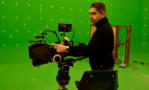
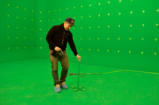
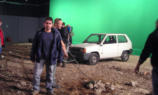
How
important
is
it
to
distinguish
a
lens-related
issue
from
a
lighting
problem
when
creating
visual
effects?
How
does
your
knowledge
of
lenses
influence
your
decisions when supervising a VFX sequence?
Whenever
I
go
on
set
as
a
VFX
Supervisor,
I
always
make
sure
to
find
out
well
in
advance
which
cameras
and
lenses
will be used.
If
you
can
establish
a
good
working
relationship
with
the
Director
of
Photography
and
the
camera
team,
it's
also
worth
discussing
whether
a
particular
lens
or
shooting
technique
is
appropriate
for
the
planned
post-production
work
or
the
effect
being created.
I'm
the
kind
of
supervisor
who
wants
to
have
all
the
relevant
data
available
and
avoid
surprises
on
set
—
or
at
least
minimise them, because there will always be a few.
Having
a
supervisor
on
set
is
particularly
important
because,
for
example,
despite
blue
screens
having
been
used
since
the
1940s,
there's
still
a
great
deal
of
negligence
and
inconsistency
when
it
comes
to
lighting
them.
It's
true
that
today's
digital
tools
allow
us
to
remove
blue
screens
more
easily
and
accurately.
However,
that
doesn't
diminish
the
importance
of
having
a
blue
or
green
screen
that
is
properly
and
evenly
lit,
positioned at the right distance from the actors, and free from obvious seams, patches or repairs.
These
issues
can
slow
down
rather
than
speed
up
the
VFX
process
and,
ultimately,
affect
the
quality
of
the
final
result.
I
can't
mention
any
specific
films,
but
I've
worked
on
scenes
shot
inside
large
sound
stages
with
blue
or
green
screens,
intended
to
look
as
though
they
took
place
outdoors.
Unfortunately,
many
cinematographers
struggle
to
visualise
the
final
appearance
of
such
scenes
and
tend
to
light
the
actors
in
a
somewhat
theatrical
way.
The
key
light
can
end
up
being
far
too
obvious,
hard
and
directional,
undermining
the
illusion
that
the
actors
are
standing
in
an
outdoor
environment. The distance between the actors and the screen is also often underestimated.
At
a
certain
size,
the
screen
itself
becomes
a
substantial
light
reflector.
In
all
these
situations,
consulting
the
VFX
Supervisor
and/or
VFX
Cinematographer
is
crucial.
Just
imagine
what
it
means
in
post-production
to
have
to
correct
the
lighting
on
the
actors
before
they
can
be
convincingly
integrated
into
a
background
added
later.
There
are
other
considerations,
too.
Modern
cameras
and
lenses
can
record
metadata
and
other
information
that
is
useful
to
VFX
artists,
provided
it
is
communicated
properly.
However,
certain
details
can
cause
problems
in
post-production if they aren't documented adequately.
For
example,
consider
the
use
of
an
additional
Diopter
or
a
Lens
Extender.
These
details
can
easily be overlooked during filming, and they aren't normally recorded by the camera.
As
a
result,
the
effective
focal
length
of
a
shot
and
its
depth
of
field
may
differ
from
what
you
would
expect
based
on
the
lens's
nominal
focal
length.
The
depth
of
field
may
also
be
altered.
This
can
create
problems
during
camera
tracking,
potentially
leading
to
an
inaccurate
result
because we're unaware of the underlying cause.
That's just one small example of an issue I discuss in much greater depth in the book.
Distortion,
chromatic
aberration,
vignetting,
bokeh,
breathing
and
fall-off:
which
of
these
phenomena is most often overlooked?
I'd
say
these
characteristics
are
often
not
properly
captured
or
profiled.
In
reality,
several
techniques
can
be
used
to
create
a
kind
of
digital
profile
of
a
lens,
and
I
describe
them
in
the
book
as well.
Of
course,
much
depends
on
whether
you
can
test
the
lenses
before
the
film
shoot
begins.
I
consider this extremely important.
In
my
view,
it's
essential
to
understand
the
eye
through
which
you'll
be
seeing
the
scenes
you're
going
to
work
on.
Every
lens
is
different,
even
when
it's
the
same
brand,
model
and
focal
length.
That's
why
it's
always
worth
arranging
a
lens-testing
session
before
shooting
begins,
ideally
alongside
the
tests
that
cinematographers
and
camera
assistants
routinely
carry
out
before
heading to set.
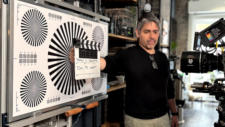
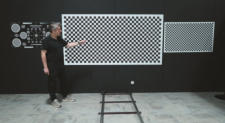
Take
lens
breathing,
for
example.
It's
particularly
noticeable
in
vintage
lenses
and
many
anamorphic
lenses.
If
we're
working
on
shots
that
involve
focus
pulls
and
need
CG
elements
added to them, lens breathing is something we'll have to account for.
Once
again,
lens
testing
can
help
us
establish
values
to
use
in
post-production
to
simulate
the
focus-breathing ratio and reproduce it digitally on CG elements.
Bokeh
is
another
important
aesthetic
characteristic
of
a
lens.
Its
shape,
internal
texture
and
softness
should
ideally
be
recreated
using
dedicated
lens
tests.
I
discuss
some
of
these
techniques in the book.
Bokeh
is
such
a
distinctive
visual
feature
that
cinematographers
may
choose
particular
lenses
specifically
for
their
out-of-focus
rendering.
Naturally,
they
expect
CG
elements
to
exhibit
the
same look.
Can
we
truly
recreate
the
character
of
a
real
lens
digitally,
or
will
something
always
be
lost?
Could
AI
convincingly
simulate
a
lens's
behaviour
without
actually
understanding
the underlying physics?
We're
still
some
way
from
achieving
highly
faithful
lens
profiling
using
traditional
techniques.
One
reason
is
that
the
major
lens
manufacturers
are
still
exploring
how
best
to
provide
digital
data
that
allows
these
characteristics
to
be
recreated
and
simulated
without
making
the
process
excessively complex, expensive or time-consuming.
This
is
a
crucial
consideration.
If
the
process
becomes
too
complicated,
people
may
simply
decide not to undertake it at all.
That
would
mean
some
lens
characteristics
would
continue
to
be
simulated
manually,
essentially
by eye.Some optical characteristics are extremely difficult to measure.
Obtaining
perfectly
accurate
data
can
sometimes
require
examining
and
measuring
the
internal
components
of
a
lens
—
which
isn't
a
viable
option
—
or
designing
specialised
devices
and
methodologies
to
extract
the
necessary
information.On
the
other
hand,
some
machine-learning
tools
are
beginning
to
offer
interesting
alternatives
and
possibilities,
particularly
algorithms
based
on look transfer.
Essentially,
you
can
train
a
system
on
the
aesthetic
characteristics
of
a
particular
lens
and
then
transfer
that
look
to
another
image.I've
personally
tried
and
tested
some
of
these
tools,
and
I
have
to
say
they're
promising.
However,
the
ones
I've
tested
were
general-purpose
simulators
based
on
specific
lenses
that
users
can
select.But
what
happens
when
you
need
to
train
a
look-
transfer system for a particular set of lenses on a specific project?
How
long
would
it
take,
and
who
would
be
responsible
for
doing
it?
At
present,
there
are
still
many questions to answer and workflows to develop before we can provide definitive answers.
We
understand
that
you've
also
worked
as
a
VFX
Cinematographer
on
film
and
advertising
productions. What does the role involve?
The
title
VFX
Cinematographer
is
particularly
appropriate
for
someone
with
a
solid
background
in
cinematography
and
camera
technology,
an
in-depth
understanding
of
cinema
lenses,
and
knowledge
of
how
they
influence
the
final
result
in
compositing
and
CGI.
For
example,
if
a
professional
works
on
set
alongside
the
Director
of
Photography
(DoP)
to
define
lens
choices,
monitor
image
characteristics,
capture
tracking
data
and
ensure
the
proper
integration
of
CG
elements,
the
term
VFX
Cinematographer
accurately
describes their area of expertise.
If
that
person
also
leads
the
entire
VFX
department
and
oversees
its
creative
and
technical
decisions,
VFX
Supervisor
with
a
specialisation
in
cinematography
might be a more precise title.
It's
essentially
a
technical
support
role
that
requires
an
in-depth
understanding
of
post-production
and
visual
effects,
as
well
as
cinematography.
It
sits
very
close
to
the
role
of
a
VFX
Supervisor
and
can
be
crucial
on
sets
where
specific
scenes
require
extensive
visual
effects.
In
my
view,
the
VFX
Cinematographer
should
have
a
particularly
close
working
relationship with the lead Director of Photography.
They
should
be
able
to
advise
on
matters
such
as
lighting
green
or
blue
screens
in
relation
to
the
actors
and
production
design,
while
also
anticipating
and
recommending
shooting
techniques
that
make
the
footage
effective
not
only
from
a
storytelling
perspective
but
also
in
terms
of
VFX
production.
Some
VFX
Cinematographers
may
also
be
asked
to
manage
and
shoot
scenes
themselves,
particularly those handled by a splinter unit or second unit.
Personally,
whenever
possible,
I
prefer
to
discuss
and
share
ideas
about
lighting
and
aesthetics
with
the
lead
Director
of
Photography,
so
that
we
can
establish
the
key
visual
and
technical
aspects of the shoot together.
Optical
imperfections
are
often
considered
flaws
that
need
correcting.
When
do
they
become
part
of
an
image's
beauty?
Is
there
a
difference
between
a
technically
correct
image
and
one
that
genuinely feels cinematic?
That's
a
wonderful
question.
While
writing
this
book,
I've
tested
a
great
many
lenses,
and
I'll
continue
testing
them
for
Cinematically
to
keep
up
with
developments
in
cinema
technology.
Throughout
this
process,
I
can't
say
I've
encountered
a
lens
I'd
consider
inherently
worse
than
another.
Each
has
its
own
identity
within
the
context
for
which
it
was designed, and each may have a place in a particular kind of storytelling.
Sometimes,
lenses
that
are
considerably
less
expensive
than
others
can
produce
a
much
more
interesting look for the visual result you're trying to achieve.
Technical
perfection
and
the
intrinsic
quality
of
a
lens
don't
always
guarantee
the
best
outcome.
It
ultimately
depends
on
the
story
you're
telling.
For
some
projects,
a
geometrically
perfect,
high-
contrast
lens
with
extraordinary
sharpness
may
be
absolutely
appropriate.
In
other
contexts,
we
might want precisely the opposite.
Let
me
give
you
a
simple
example.
For
a
period
drama,
I
might
favour
a
visual
aesthetic
built
around
lenses
that
produce
a
more
organic
image
and
render
skin
tones
in
a
softer,
more
flattering
way,
enhancing
the
romantic
and
ethereal
qualities
of
certain
characters.
The
same
might
apply
to
a
fairy
tale
or
a
romantic
fantasy.
In
some
cases,
certain
aberrations
can
even
help give a film an older, more period-specific appearance.
I'm
reminded
of
the
series
Downton
Abbey,
which
used
Cooke
S4
lenses,
known
for
their
somewhat
classic
look
and
warm
rendering,
with
strong
yet
gentle
microcontrast.
Then
there's
The
Crown,
where
Cooke
Speed
Panchro
lenses
were
used
for
their
low-contrast
character
and
softness.
I
could
also
mention
We
Live
in
Time,
the
2024
British
romantic
drama,
which
used
Panavision
PVintage
lenses
to
achieve
a
very
soft,
natural
look and avoid excessive sharpness.
For
science
fiction
or
a
crime
thriller,
I
might
instead opt for sharper, higher-contrast lenses.
One
example
that
comes
to
mind
is
Season
1
of
Black
Doves,
where
the
cinematographer
used
Panavision
Panaspeed
lenses,
known
for
their
high
definition,
rich
detail
and
pronounced
contrast.
Ultimately,
the
type
of
storytelling
determines
the
choice.
For
a
sharper,
more
hard-
edged
story,
I'd
favour
a
sharper
look.
For
something
romantic,
fantastical
or
perhaps
a
comedy
with
more
nuanced
characters,
I
might
choose
a
softer
lens.
Of
course,
these
so-called
rules
can
be
completely
overturned
when
you're
deliberately pursuing a different aesthetic.
The
same
applies
to
the
choice
between
spherical
and
anamorphic
lenses.
By
virtue
of
their
optical
design
and
visual
characteristics,
anamorphic
lenses
are
often
well
suited
to
productions
featuring
expansive
environments
and
landscape
shots.
But
they
can
also
be
used
in
confined
spaces,
with
the
deliberate
intention
of
creating
claustrophobia,
unease,
an
otherworldly
atmosphere or, in more extreme cases, a sense of hallucination.
We
discuss
these
kinds
of
aesthetic
decisions
in
the
book,
and
some
of
the
cinematographers
I
interviewed for the final chapter also share their personal perspectives on the subject.
How
much
should
VFX
artists
know
about
lenses compared with people working on set?
As
I've
already
mentioned,
I
believe
it's
essential
to
understand
the
entire
image-capture
process,
not
just
the
lenses
but
also
the
cameras
and
the
rigs
used
to
mount
them
and
execute
camera
movements.
This
doesn't
apply
exclusively
to
VFX
artists.
Every
department
involved
in
visual
storytelling
should
have
a
good
understanding
of
cinematography,
albeit at different levels.
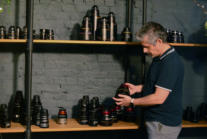
Even
in
production
design
and
costume
design,
when
choosing
a
fabric
for
a
set
or
selecting
an
actor's
wardrobe,
it's
important
to
consider
not
only
how
well
it
fits
the
story
and
narrative
but
also how it will appear on screen under the lighting being used.
It
would
also
be
valuable
to
maintain
close
communication
with
the
Director
of
Photography,
who
might
be
considering
low-contrast
or
high-contrast
lenses.
That
decision
can
have
a
significant
influence
on
the
choice
of
colours,
fabrics
and
even
furniture
for
a
particular
environment.
When
I
think
of
Guillermo
del
Toro's
most
recent
Frankenstein,
I
remember
visiting
the
exhibition
of
props,
makeup
and
costumes
from
the
film
here
in
London.
The
meticulous
study
of
the
colour
palette
in
relation
to
the
atmosphere
of
the
cinematography
and
the
lighting
was
truly
what
gave
the film's overall aesthetic its distinctive identity.
The
same
applies
to
visual
effects
artists.
We
work
in
film
and
television,
so
I
believe
a
solid
understanding
of
aesthetics
and
cinematography
is
absolutely
fundamental.
And
by
cinematography, I mean not only camera technology but also the lighting of actors and sets.
How
important
is
it
to
understand
the
physics
behind
an
image
compared
with
relying
on
visual experience and artistic intuition?
It's
enough
to
say
that
you
need
to
know
the
rules
before
you
can
break
them.
You
can
experiment
with
any
kind
of
creative
expression
or
aesthetic
deviation
you
like,
but
you
first
need
to understand the fundamentals. I believe this applies to every form of artistic creation.
With
the
evolution
of
digital
cameras,
has
the
character
of
lenses
become
more
or
less
important?
The
character
of
a
lens
and
the
choice
of
which
lens
to
use
have
always
been
fundamental
to
cinematic
storytelling,
ever
since
film
was
the
only
way
to
shoot
a movie.
Back
then,
people
often
looked
for
the
sharpest
lenses
available
to
compensate
for
the
softness
inherent in film.
With
digital
cinematography,
the
trend
has
reversed.
We're
now
looking
for
lenses
with
less-than-perfect
characteristics
to
add
texture
to
digital
images,
which
can
seem
almost
too
perfect
because
of
increasingly
advanced
sensors.
The
aim
is
to
make
images
feel
more optical and filmic rather than precise and sterile.
Film,
as
a
visual
medium,
has
a
set
of
aesthetic
characteristics
that
we've
all
absorbed
into
our
perception
of
cinema.
They
allow
us
to
distinguish
a
film
almost
immediately
from
a
documentary,
a
music
video or a commercial.
When
we
see
an
image,
we
often
recognise
straight
away
whether
it
belongs
to
a
film,
not
only
because
of
the
composition
but
also
because
of
its
aesthetic
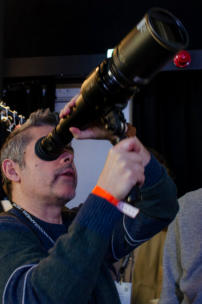
character — what we describe as cinematic.
And
that
look
is
often
anything
but
visually
perfect
or
precise.
In
fact,
sometimes
the
softer
and
less
sharply
defined
an
image
is,
the
more
authentic
it
feels.
It's
a
little
like
painting.
Imagine
a
painter
achieving
such
technical
perfection
that
they
can
recreate
a
scene
so
realistically
that
it
looks
like
a
photograph.
We'd
certainly
appreciate
their
technical
skill,
but
we'd
probably
still
be
more
drawn
to
Caravaggio's
depiction
of
people
and
environments,
with
his
distinctive
painterly,
almost cinematic and dreamlike quality.
It's
a
style
that
feels
more
expressive
and
authentic
than
merely
precise
and
descriptive.
For
example,
when
I
visit
the
National
Gallery,
I
love
Canaletto's
highly
realistic
depictions
of
Venice,
with their extraordinary level of visible detail. He's one of my favourite painters.
Then
I
move
on
to
Caravaggio
or
Rembrandt.
Even
though
everything
feels
softer
and
more
painterly,
and
the
lighting
is
far
more
atmospheric,
their
work
still
feels
more
authentic
and
alive
to
me.
It's
difficult
to
explain
exactly
what
cinematic
means
because
it's
an
aesthetic
feeling
that
seems to be innate in all of us.
My
point
is
that
the
renewed
interest
in
a
slightly
more
vintage
look
in
cinema
stems
precisely
from the desire to recapture that optical quality and sense of authenticity.
Today,
almost
any
optical
effect
can
be
added
digitally.
Do
you
think
this
has
improved
the
work
of
VFX
artists,
or
does
it
risk
making
them
less
attentive
to
the
original cinematography?
I
think
this
capability
becomes
dangerous
when
a
digital
artist
stops
asking
whether
they're
actually
reproducing
the
optical
characteristics
of
a
lens
and
simply
takes
it
for
granted
that
they'll be able to do so.
It's
true
that
visual
effects
now
allow
us
to
do
practically
anything.
But
it's
essential
to
maintain
a
critical
eye,
learn
to
observe
the
world
around
us,
understand
how
things
behave
and
how
light
works
—
and,
above
all,
study how the world looks through a camera.
Cinema
is,
of
course,
an
illusion,
it’s
fiction.
Directors
sometimes
deliberately
bend
the
rules
to
make
their
images
more
cinematic.
That
doesn't
necessarily
mean
making
them
realistic
or
mathematically
accurate,
but
rather
making
them
serve
the
visual
narrative
and
enrich
the
aesthetic
result.
Personally,
the
first
thing
I
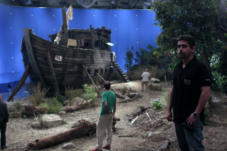
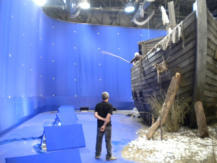
always
ask
my
VFX
artists
to
do
before
starting
work
on
a
shot
is
to
understand
its
visual
geography.
That
means
identifying
the
direction
of
the
key
light,
understanding
the
optical
characteristics
of
the
lens
used,
analysing
areas
of
the
image
containing
reflections,
highlights
and shadows and studying the camera movement, among other things.
So,
to
answer
your
question,
I
believe
it's
vital
for
VFX
artists
to
understand
cinematography
and,
in particular, to be familiar with what was actually captured on set.
From
this
perspective,
we
supervisors
use
various
techniques
during
production
to
collect
different
kinds
of
data,
photographs
and
reference
images
that
will
be
useful
in
post-production
and
help
artists
understand
the
geography
of
the
set
as
if
they
had
been
there
themselves.
I
discuss these techniques extensively in the book, too.
With
AI
tools
capable
of
generating
or
modifying
images,
how
important
will
it
remain
to
understand
how
a
real
lens
behaves?
Could
knowledge
of
optics
become
an
even
greater
advantage in a world where images are increasingly easy to generate?
Artificial
intelligence
tools
used
in
the
arts
learn
from
the
material
we
feed
them.
If
one
day
we
were
no
longer
able
to
provide
them
with
new
ideas,
creativity
and
knowledge
—
or
simply
stopped
doing
so
—
these
tools
would
have
no
choice
but
to
recombine
existing
information.
That could lead to aesthetic homogenisation.
And
if
machines
continued
learning
from
that
increasingly
homogenised
aesthetic,
we
could
end
up
witnessing
a
form
of
regression.
My
point
is
that
human
creativity
is
what
moves
the
world
forward, and this applies far beyond the arts.
Returning
to
your
question,
I
don't
believe
images
are
necessarily
easy
to
generate.
Or
rather,
generating
them
has
certainly
become
technically
easier
for
people
who
previously
lacked
the
ability
or
knowledge
to
do
so.
Today,
anyone
can
generate
an
image,
but
that
doesn't
automatically make them a director or filmmaker.
The idea always matters, as does the artistic training that gives you the tools to bring it to life.
What
worries
me
a
little
is
the
possibility
that,
when
an
artist
cannot
recreate
what's
genuinely
in
their
mind,
they
might
eventually
settle
for
whatever
an
AI
tool
produces
simply
because
it's
the
best result they can get.
Becoming
creatively
lazy
and
accepting
compromises
could
be
the
beginning
of
an
aesthetic
decline
in
the
arts.
And
that
would
be
a
bitter
punishment
we'd
have
inflicted
on
ourselves,
regardless of the technology.
I
understand
cinematography
—
and
always
will
—
as
a
collaborative
art
form
in
which
direct
contact with the physical world is the only truly meaningful way to learn.
I
also
believe
in
sharing
knowledge
and
interacting
with
other
artists.
This
is
an
invaluable
source
of
richness
that
makes
a
film
more
compelling
and
convincing.
The
same
applies
to
technical
knowledge.
If
one
day
we
all
end
up
confined
to
our
homes,
making
films
on
our
computers,
we'll
not
only
face
a
global
glut
of
content
and
projects
that
nobody
will
ever
watch;
I'm
also
convinced
we'll
lose
many
of
the
aesthetic
qualities
that
define
cinematography.
That's
simply
because
new
generations
of
artists
may
never
have
worked
on
a
set
or
experienced
the
characteristics
of
real
camera systems firsthand.
The
risk
is
that
we
abandon
our
aesthetic
heritage
and
replace
it
with
images
that
feel
sterile
and
increasingly similar to one another.
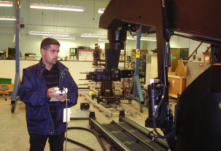
What
technical
skills
do
you
think
will
be
essential
for
VFX
artists
over
the
next
ten
years?
Certainly,
learning
how
to
use
AI
tools
and
adapt
them
to
your
own
creative
needs
will
be
the
next
step.
AI
is
already
here.
It's
no
longer
even
new,
so
learning
to
embrace
these
tools
from
a
technical
perspective
while
maintaining
a
critical
and objective eye is absolutely essential.
Some
artists
are
strongly
opposed
to
these
systems
because
they
fear
being
replaced.
But
technological
progress
is
inevitable,
and
failing
to
keep
up
with
this
revolution
means
being
left
behind.
In
that
case,
we'd
be
putting
ourselves
out
of
the
market,
rather
than
the
technology
itself doing it for us.
We
need
to
learn
how
to
evolve
our
work
and
technical
abilities.
In
some
cases,
new
and
innovative opportunities may even emerge that improve our professional standing.
That
said,
the
visual
effects
industry
has
been
using
machine-learning
tools
for
some
time
in
certain stages of production, sometimes with remarkably useful results.
However, there is a problem with becoming fixated on them.
I'm
referring
to
artists
who
insist
on
using
AI
tools
simply
because
they're
fashionable,
because
they
believe
they're
now
the
only
viable
solution,
or
perhaps
because
they
lack
proficiency
in
some
traditional
VFX
techniques.
This
can
end
up
undermining
productivity.
Using
machine-
learning
systems
often
amounts
to
a
gamble:
you
try
something
and
hope
you're
lucky
enough
to
get an acceptable result after a few iterations.
But
when
it
doesn't
work,
persisting
with
the
same
approach
simply
wastes
working
time.
AI
should make us faster, not slower! Otherwise, it becomes a paradox.
That's
why,
when
I'm
supervising
visual
effects
work
at
a
company,
I
always
tell
artists
who
want
to
experiment
with
machine-learning
techniques
to
give
themselves
no
more
than
an
hour
and
a
half. If the results aren't promising by then, they should return to traditional methods.
Otherwise,
productivity
and
the
company's
production
schedule
will
suffer.
If
you
multiply
the
hours
wasted
pursuing
unsuccessful
AI
solutions
across
all
the
artists
involved
in
a
production,
you end up throwing away a considerable amount of money.
There
have
been
reports
of
visual
effects
companies
having
to
hire
large
numbers
of
artists
to
fix
work
that
artificial
intelligence
has
done
badly.
Is
the
world
turning
upside
down?
Are
we
handing
creativity
over
to
machines
and
turning
ourselves
into
fixers?
Wasn't
it
supposed
to
be
the
other
way around? Weren't these tools meant to help us work more efficiently?
That's
why
I
believe
AI
must
be
adapted
to
our
actual
needs
rather
than
becoming
an
obsession
for
artists.
Above
all,
we
need
to
learn
how
to
train
and
direct
these
tools
—
and
train
ourselves
to
use
them
properly
—
so
that
we
can
achieve
the
aesthetic
quality
we're
aiming
for.
Nothing
less. We must avoid compromising our standards.
By
the
way,
in
professional
filmmaking,
the
level
of
detail
is
extraordinarily
high.
Nobody
can
afford to settle for a visual solution that doesn't work properly.
What's
the
one
idea
you
hope
readers
will
remember after finishing the book?
A passion for the film image.
Which
subject
required
the
most
research
or
was the most difficult to explain?
Probably
astigmatism.
It's
an
optical
aberration
that
can
occur
in
a
lens,
but
it's
difficult
to
find
in
practice
and also quite complex to explain.
We've
noticed
that
the
book
cover
says
"Volume
1".
Should
we
expect
a
Volume
2?
Is
there
another
subject
you'd
like
to
explore
in
greater
depth or turn into a new book?
Oh,
there
are
still
so
many
things
to
add
—
things
I
might
even
have
included
in
Volume
1,
because
cinematography
is
constantly
evolving
and
changing.
But
I
would
have
needed
more
than
a
thousand pages!
That's
one
of
the
reasons
this
website
now
exists,
too.
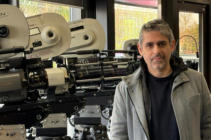
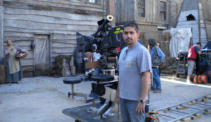
The
idea
is
to
create
a
point
of
reference
for
filmmakers,
cinematographers
and
VFX
artists,
where they can share their passion for cinematography and explore its technical side.
We'll test lenses and talk about equipment and technology. At least, that's the plan!
Beyond
that,
there
will
certainly
be
a
Volume
2
of
Cinematically.
This
time,
the
focus
will
be
more
specifically on cinematic language and shot composition.
That,
too,
comes
from
a
passion
I've
had
since
childhood:
keeping
a
little
notebook
in
which
I'd
write down all the interesting shots I came across while watching films.
The
second
volume
will
therefore
focus
more
closely
on
visual
storytelling
through
the
language
of cinematography and composition.
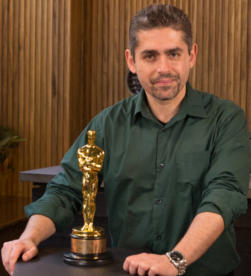
To learn more about Gianluca Dentici, please click here
or visit his website www.gianlucadentici.com


